Our Viking Grand European Tour in July 2022 began with extra time in Amsterdam and continued to Budapest, followed by a post-cruise extension in Prague. Along the way came cathedral cities, small German towns, castles, food tours, Austrian scenery—and a change of ships when low water interrupted the route.
We began aboard Viking Bragi and later swapped to Viking Skadi, traveling aboard two Viking Longships on this journey. Low water first changed our schedule on the Rhine, then led to a ship swap when a section of the Danube was too shallow to pass. The trip continued, but it became a firsthand lesson in how river conditions can shape a river cruise.
Here is how our journey unfolded, from Amsterdam’s canals to Budapest at night.
Starting with extra time in Amsterdam
Our Amsterdam pre-cruise extension gave us time to explore before boarding. On the first day, we toured the Royal Palace and the New Church, then took a canal boat ride. Seeing the city from the water was a fitting beginning to a trip built around Europe’s rivers.
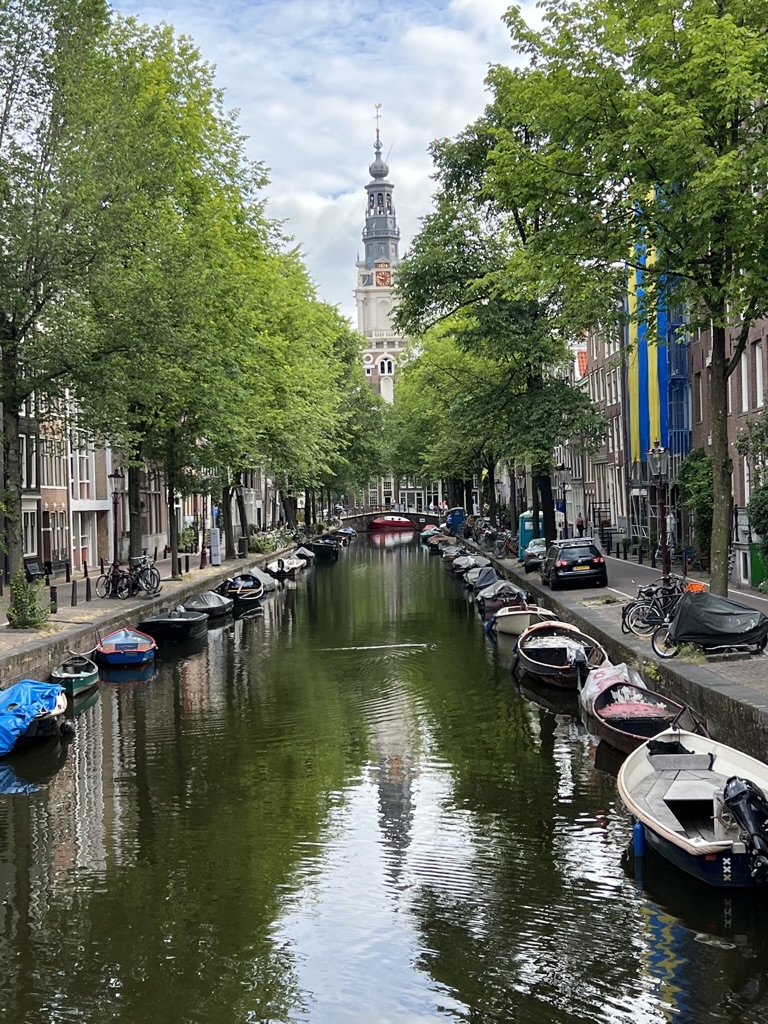
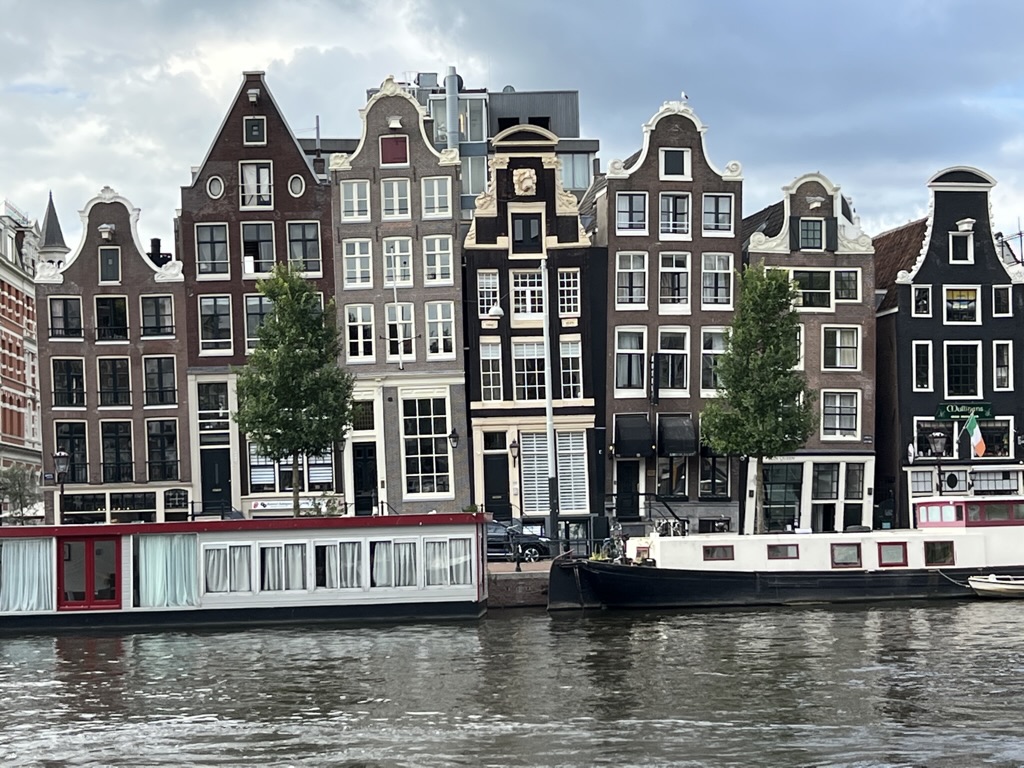
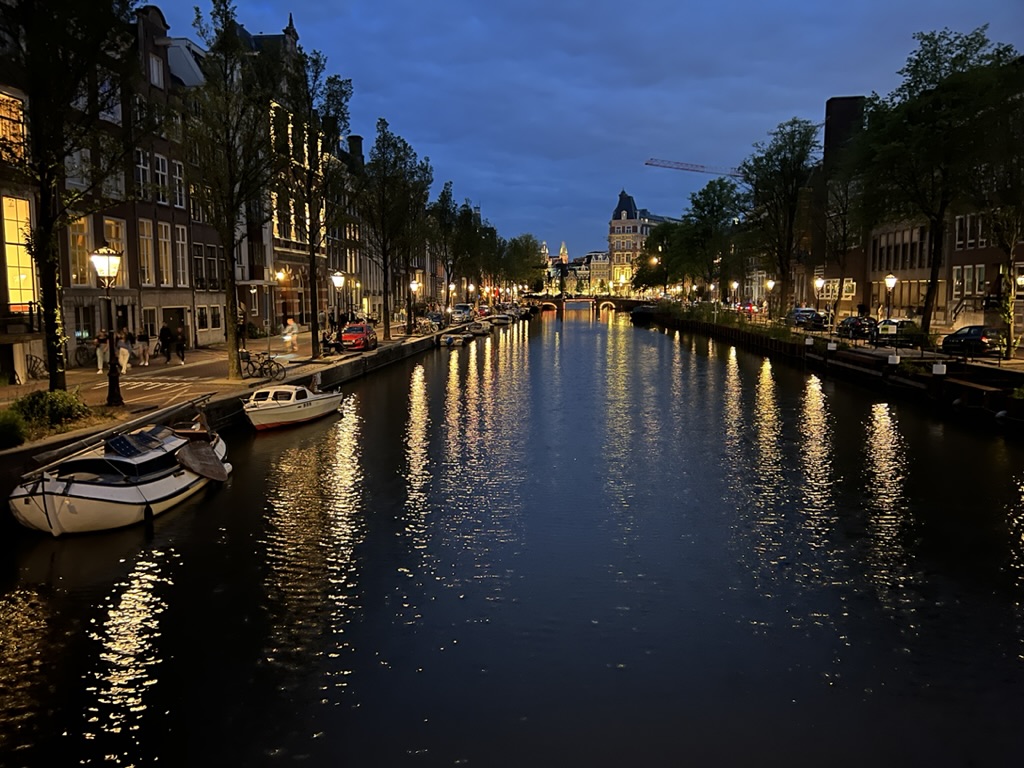
The next day brought a walking tour, with stops including the Flower Market and Rembrandt Square, followed by a visit to the Anne Frank House. In my trip notes, I remarked on how well the museum and house were presented. We also made time for a stroopwafel and saw Amsterdam after dark.
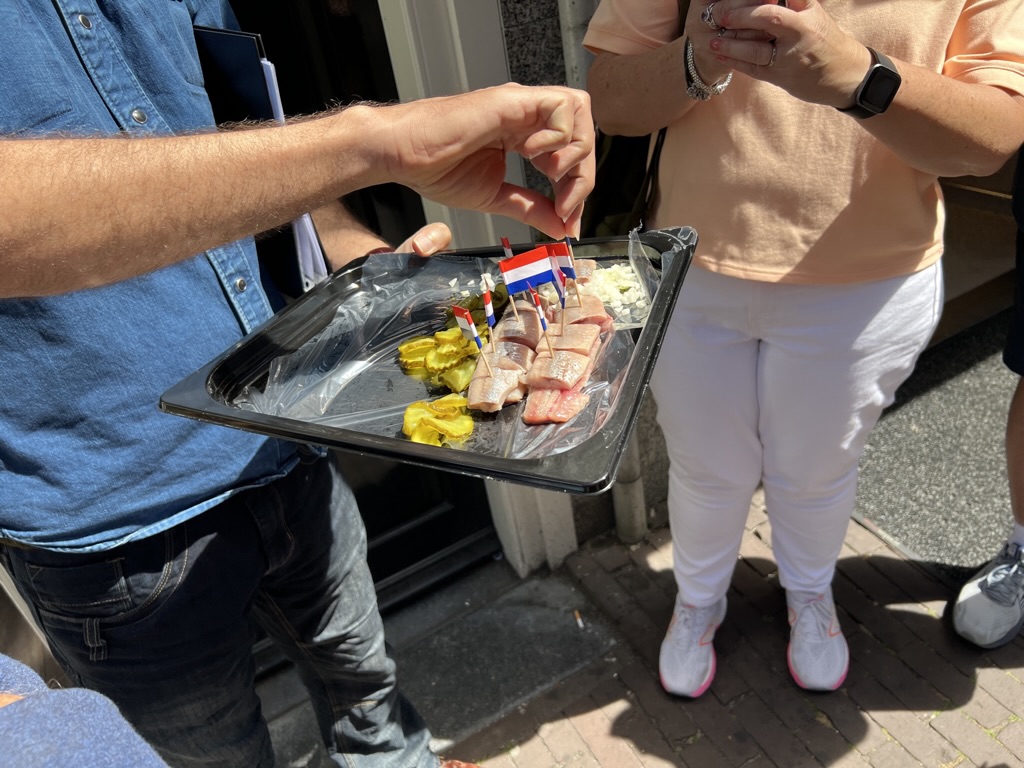
On our third day, we visited the Rijksmuseum and the Van Gogh Museum and took a food tour through the Jordaan neighborhood. The tasting list was a journey of its own: apple pie, raw herring, fried cod, cheeses, meats, chicken with peanut sauce, stroopwafel, Dutch gin and bitterballen.
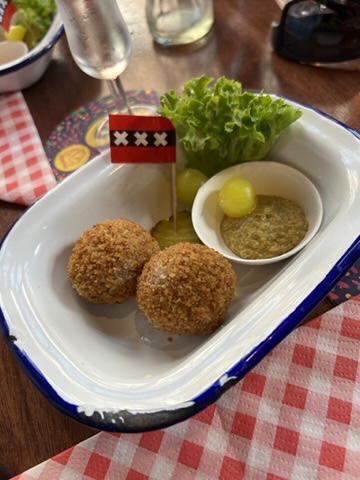
By that afternoon, we were boarding Viking Bragi, our first Longship of the trip. Those days before the cruise had already given us museums, history, neighborhood walks and a substantial introduction to Dutch food.
Low water changes the Rhine schedule
The first change came early. My July 17 post noted that the Rhine’s water level was low and that the itinerary had been altered for a day or two. We spent much of that day cruising.
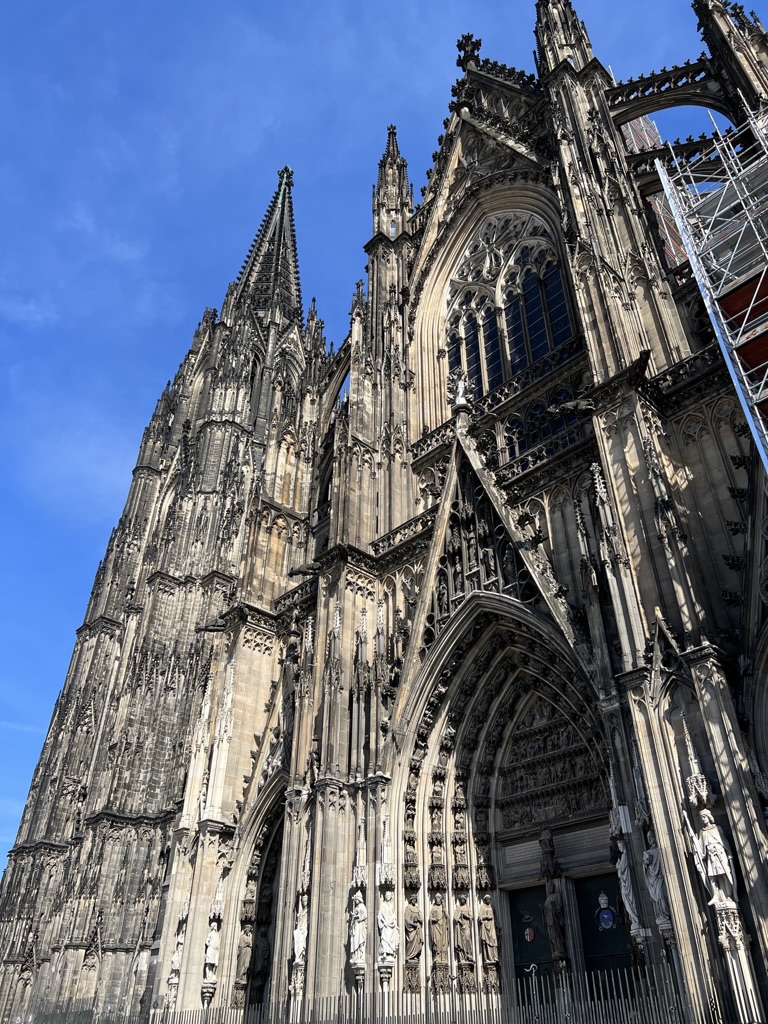
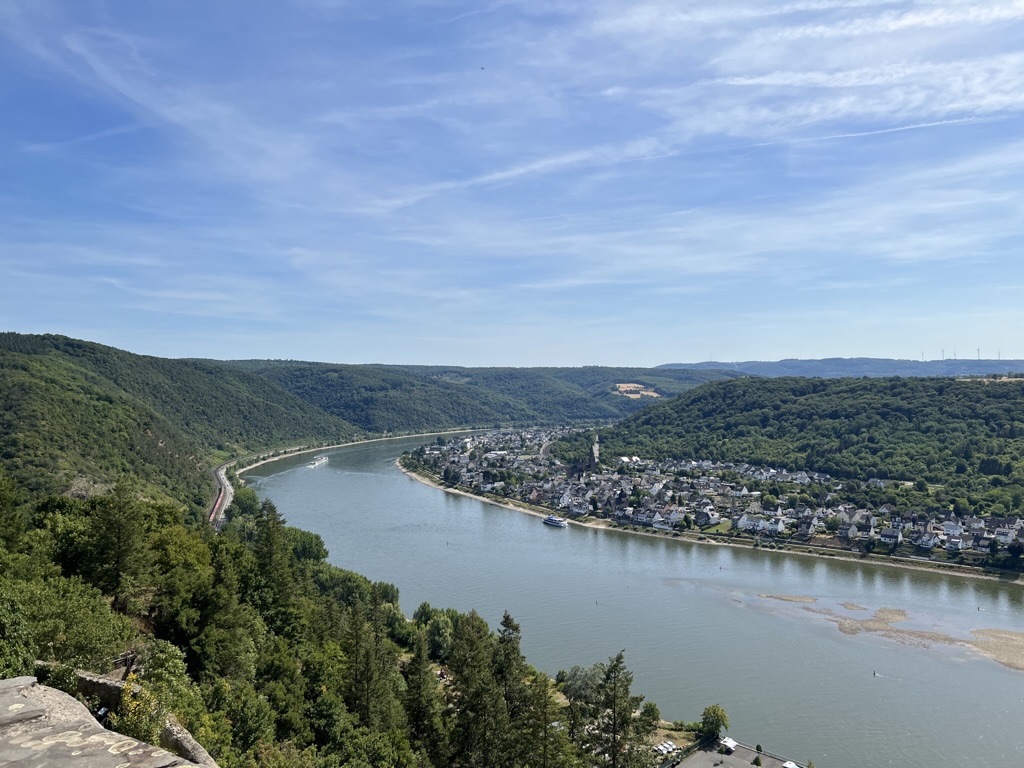
The following day brought a full sightseeing schedule. To get past a low-water point, stops and excursions were combined. We visited Cologne Cathedral and Marksburg Castle near Koblenz, then watched more castles pass during an evening cruise through the Middle Rhine region.
It was an early reminder that the order and pace of a river journey can change. On our sailing, that meant fitting more into one day and adjusting when we traveled between places.
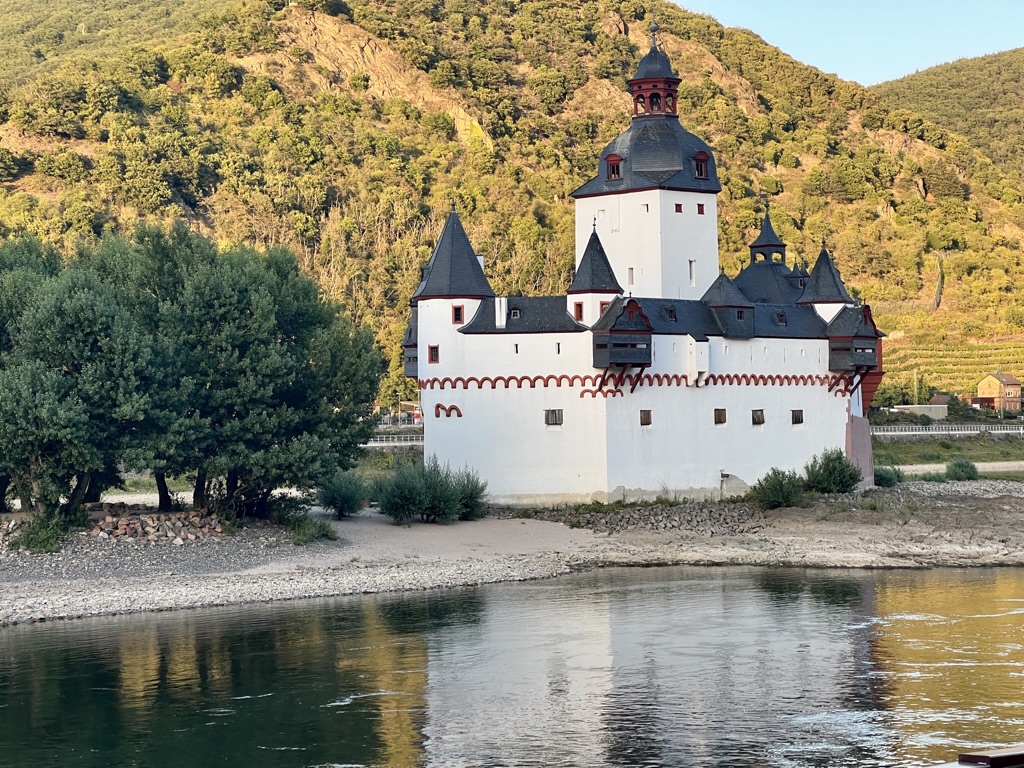
Between stops: life aboard
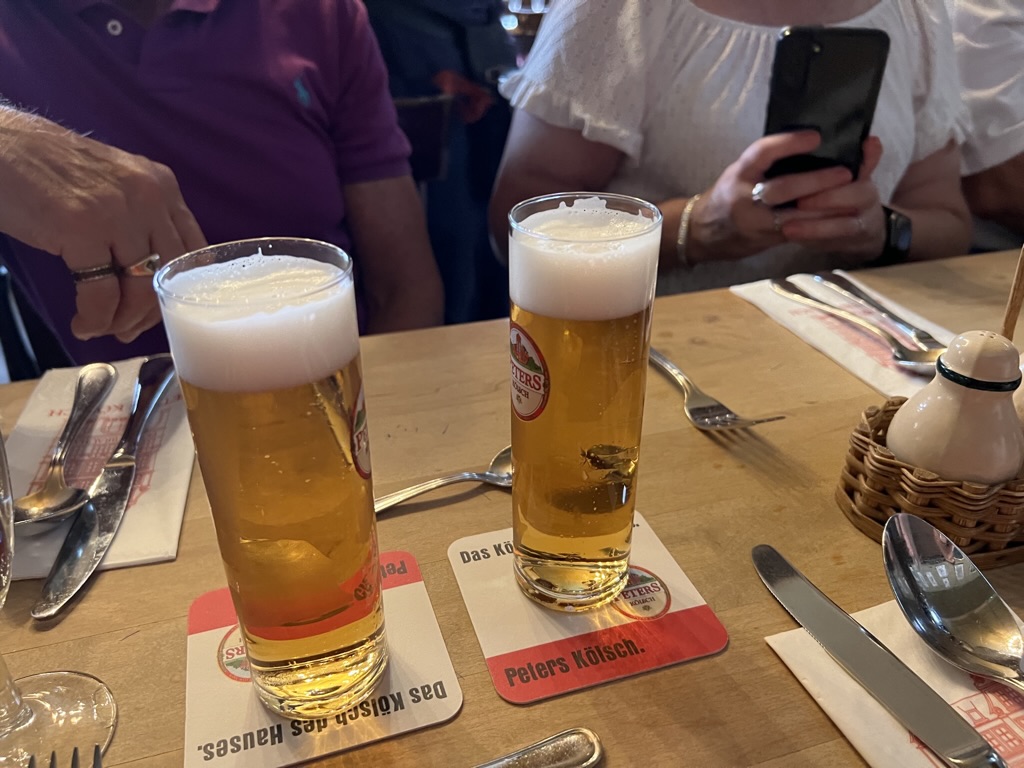
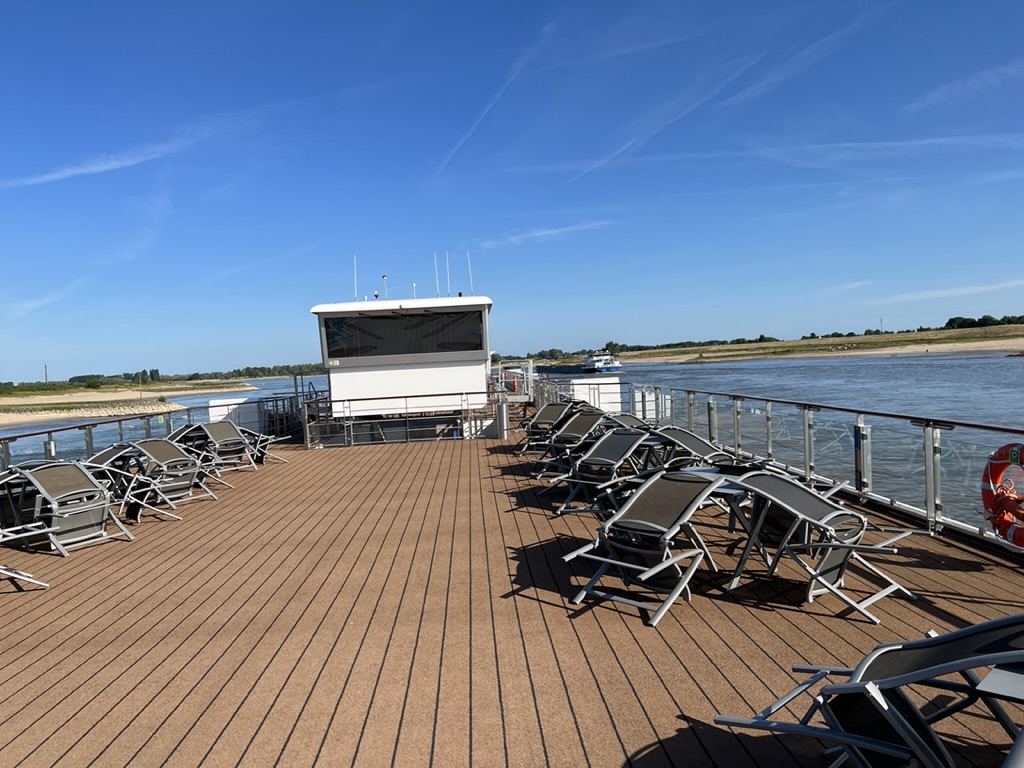
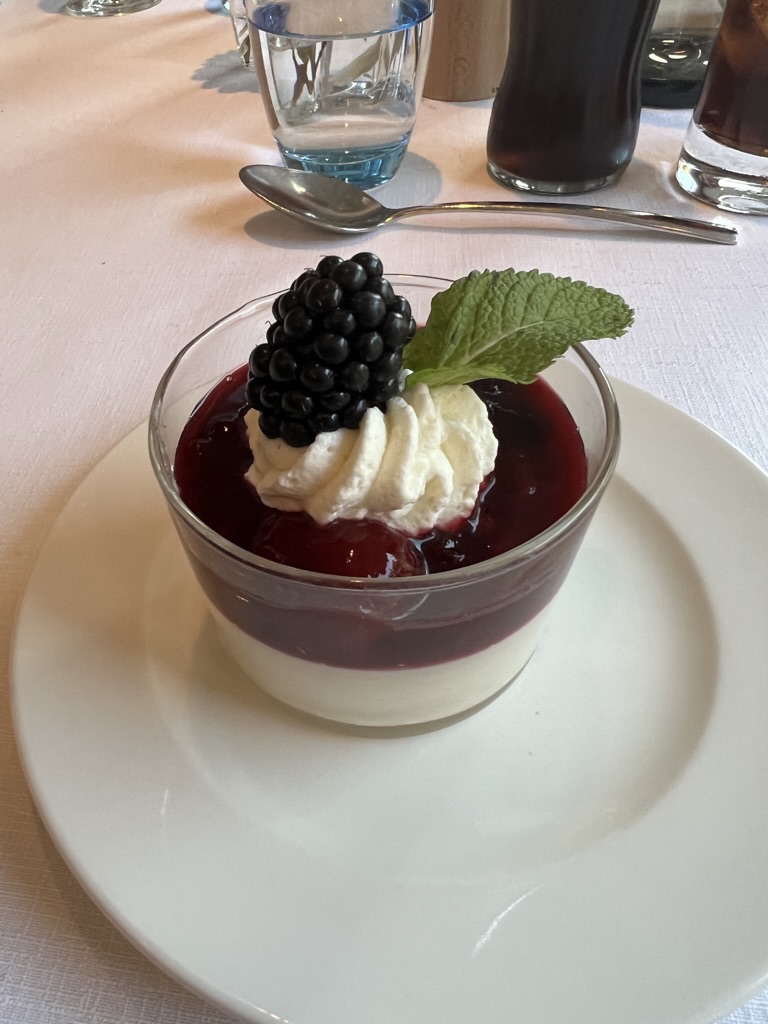
The photographs from this part of the journey show another side of the trip: the open sun deck, a meal aboard and views passing along the riverbank. After dark, fairground lights reflected on the water.
Mainz, the Main River and smaller German towns
Next came Mainz, followed by our entry into the Main River. After Cologne and the castle scenery of the Rhine, the itinerary brought a succession of towns to explore on foot.
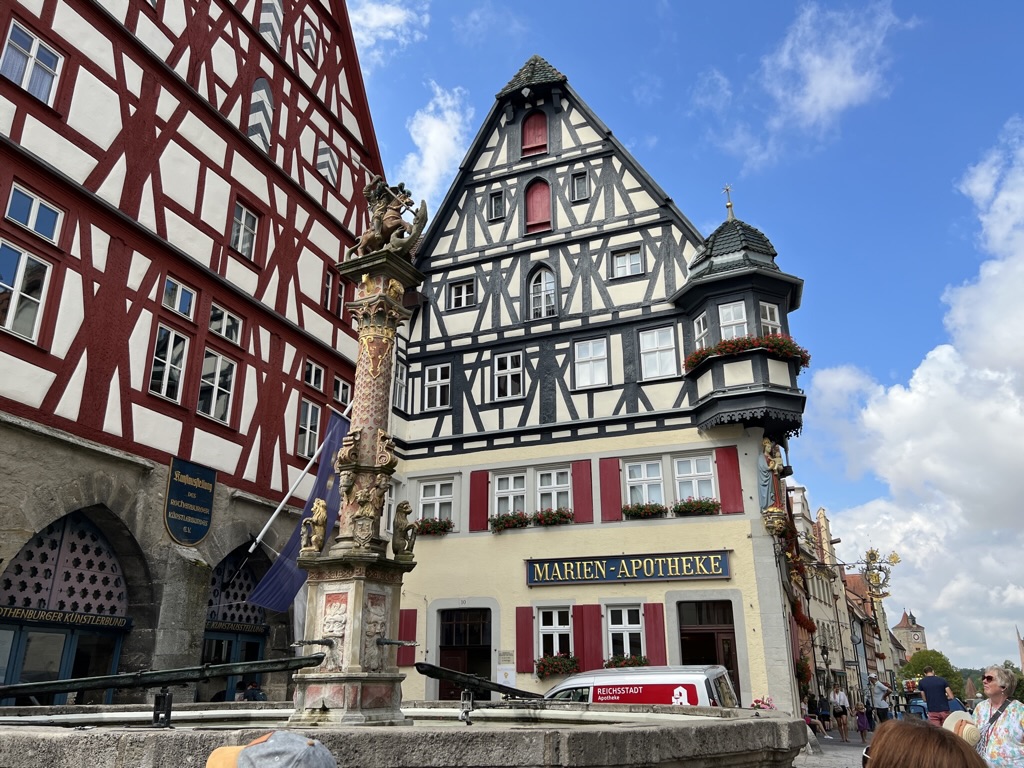
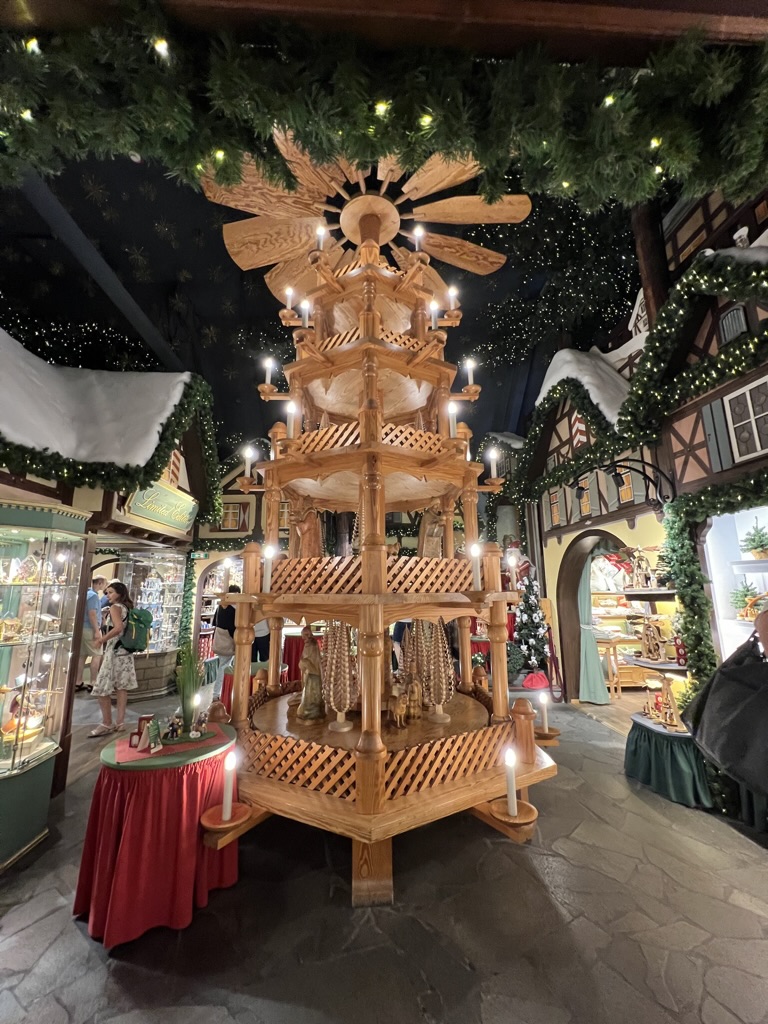
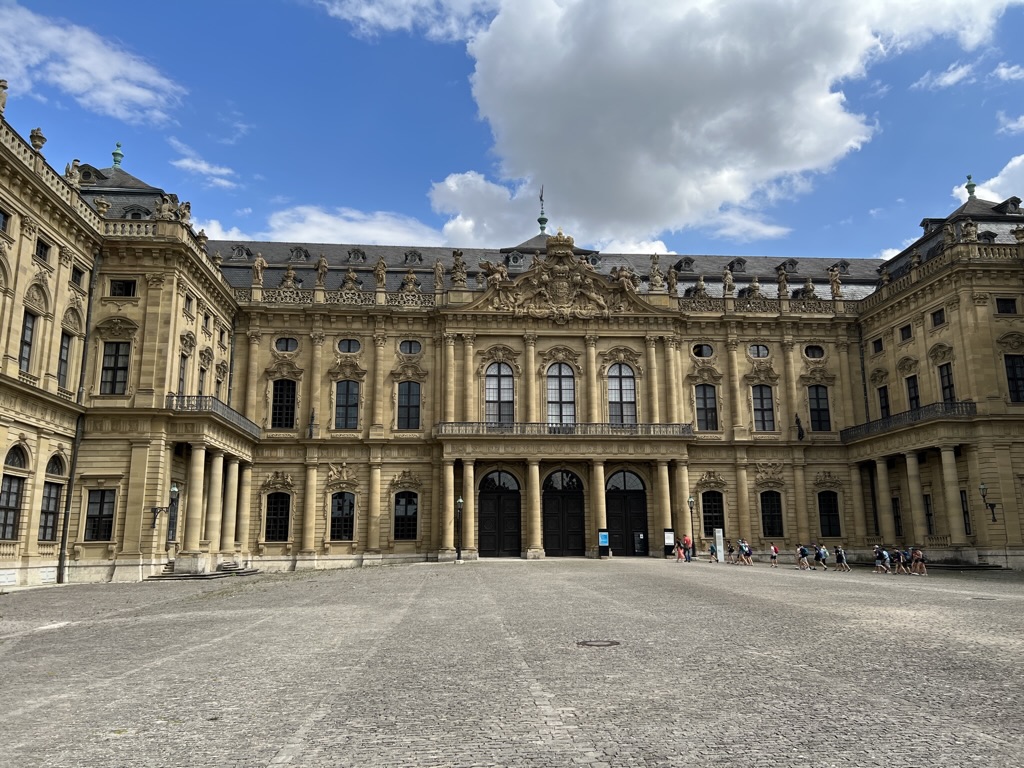
We toured Miltenberg and Wertheim, then visited Rothenburg ob der Tauber and Würzburg. Rothenburg’s half-timbered houses, town wall and Käthe Wohlfahrt Christmas store featured in my notes. Würzburg added a grand palace visit to the day.
This stretch of the journey offered a different scale of sightseeing: streets, squares and smaller towns, with something new waiting at each stop.
Bamberg: a riverside town hall and moments of remembrance
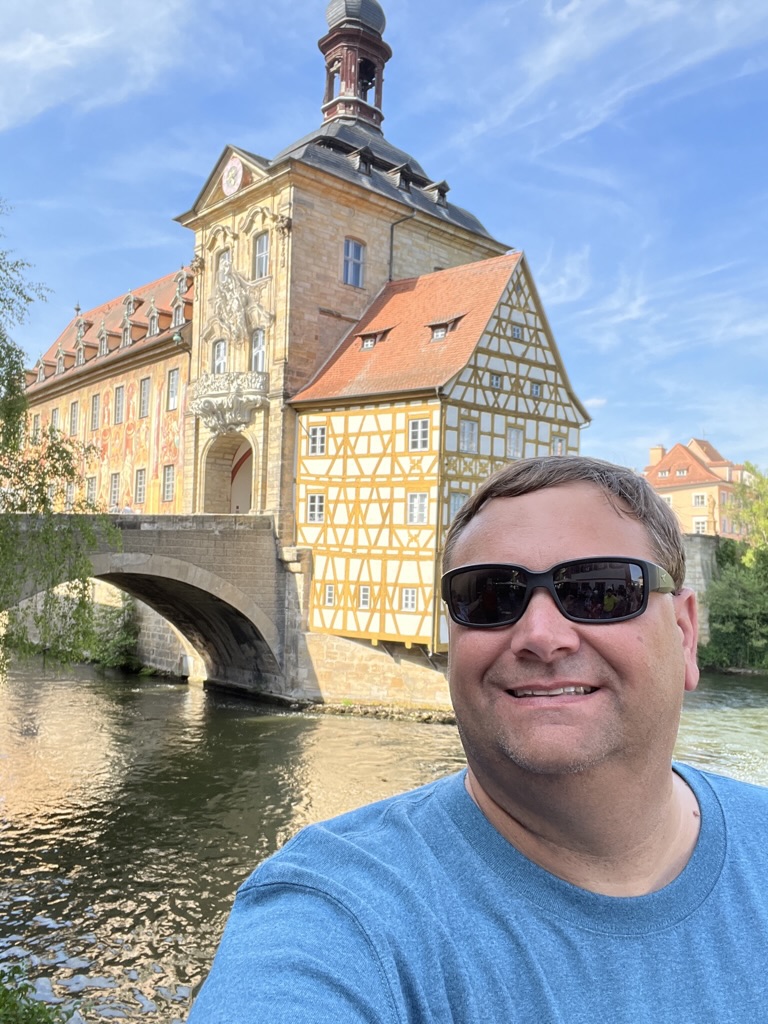
In Bamberg, the town hall’s position on the river stood out, along with the city’s beer traditions—especially its smoked beer.
My post also noted the small memorial stones set into the pavement. These prompted us to look down and remember people persecuted during the Holocaust. They were a quieter part of our walk, alongside the architecture and everyday life of the town.
Nuremberg—and a change of Longships
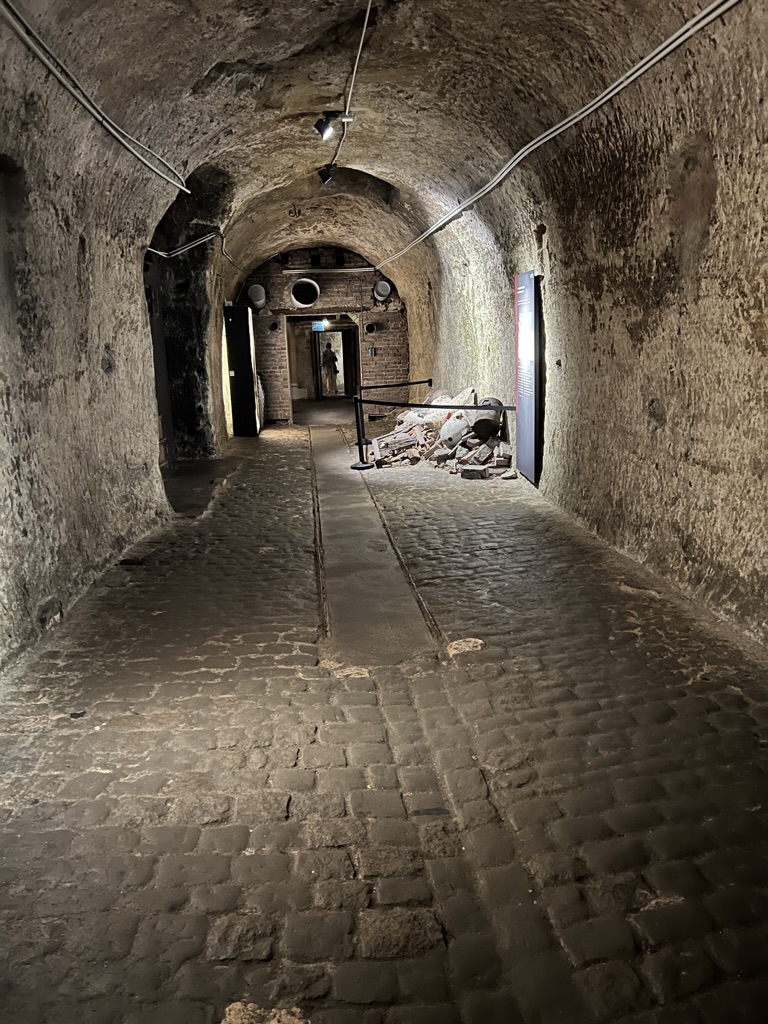
Our Nuremberg visit included a tour of an underground bunker used to protect art during the war. We also had Nuremberg-style bratwurst and sauerkraut.
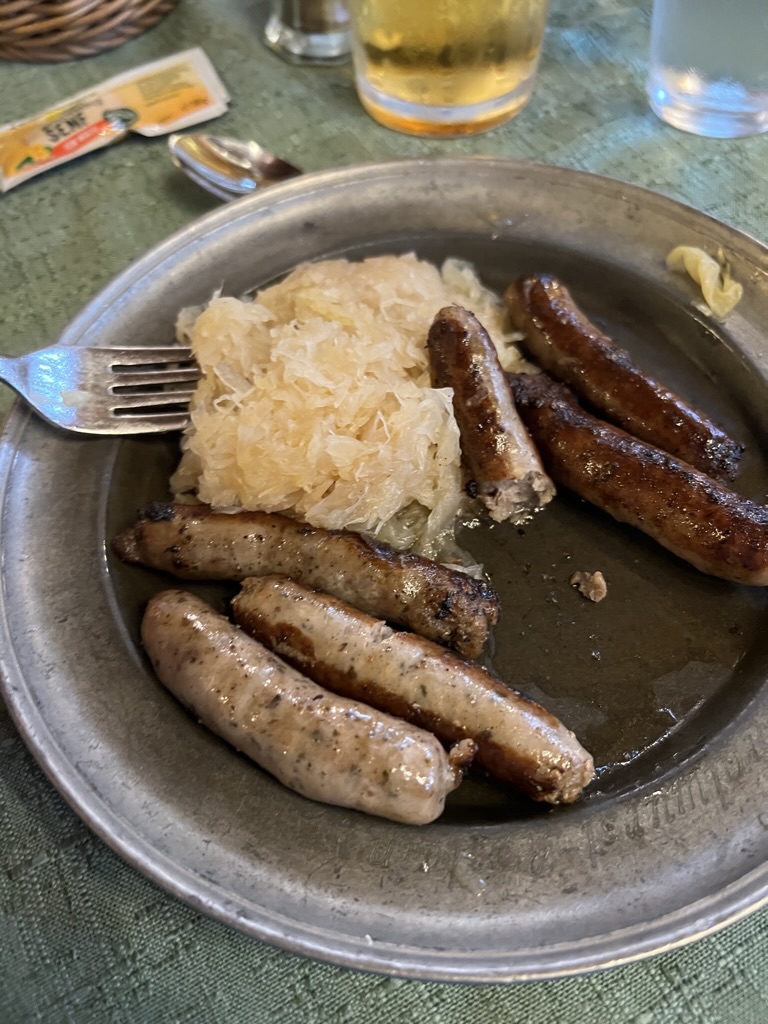
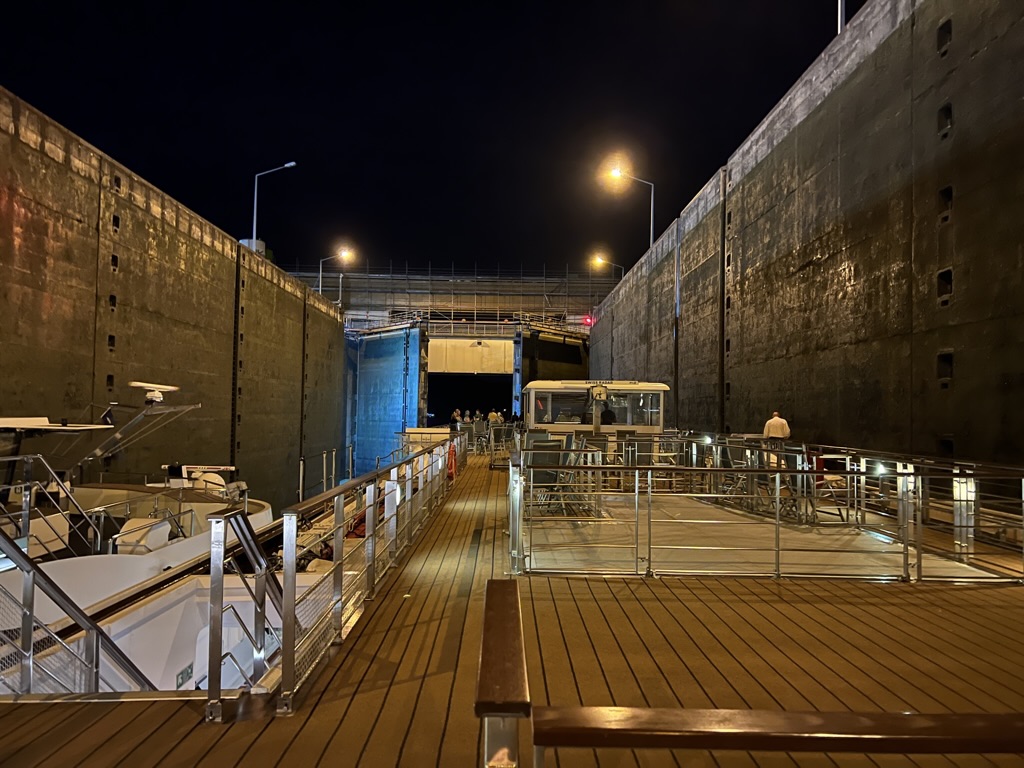
That day’s post ended with a significant travel update: we were switching ships because a section of the Danube was too low to pass. We began the cruise on Viking Bragi and swapped to Viking Skadi to continue our journey.
This was the point where our Grand European Tour became a two-Longship journey. The earlier low water on the Rhine had affected the schedule; this time, continuing the itinerary involved changing vessels.
For anyone considering a river cruise, that distinction matters. A disruption does not always take the same form. Our July 2022 trip included both rearranged sightseeing and a ship swap. Those were the arrangements made for our particular sailing, rather than a guarantee of how another departure would be handled.
Regensburg, Passau and a smaller boat on the Inn
After the ship-swap portion of the journey, our sightseeing continued in Regensburg, where the Gothic cathedral featured in my daily notes.
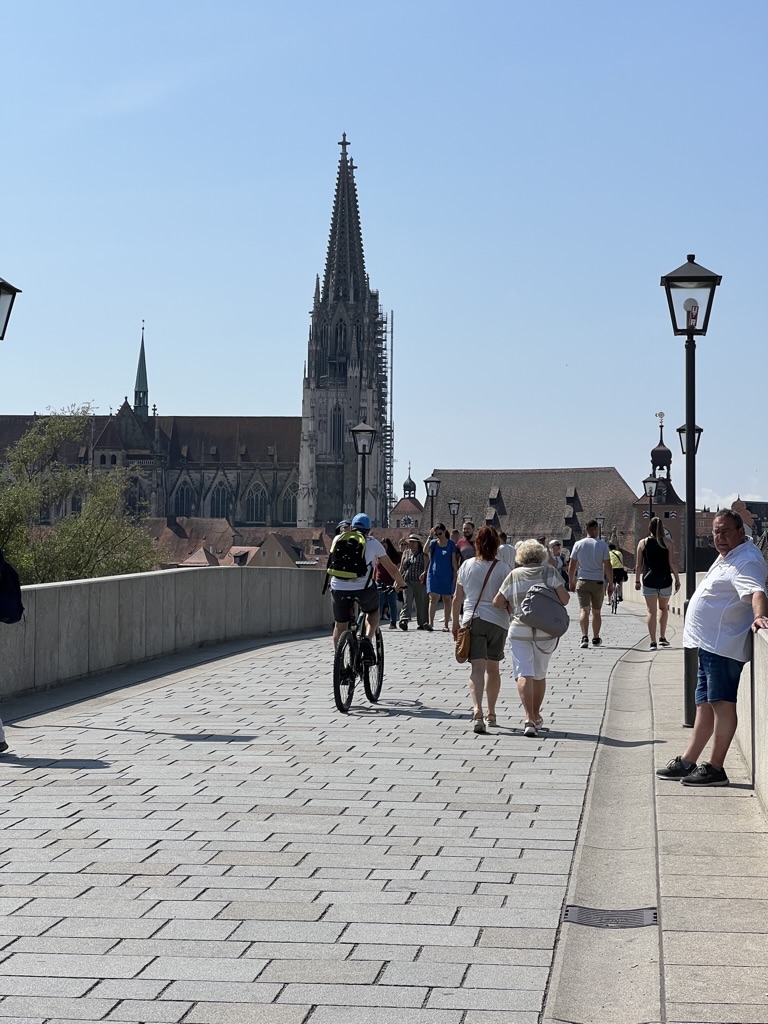
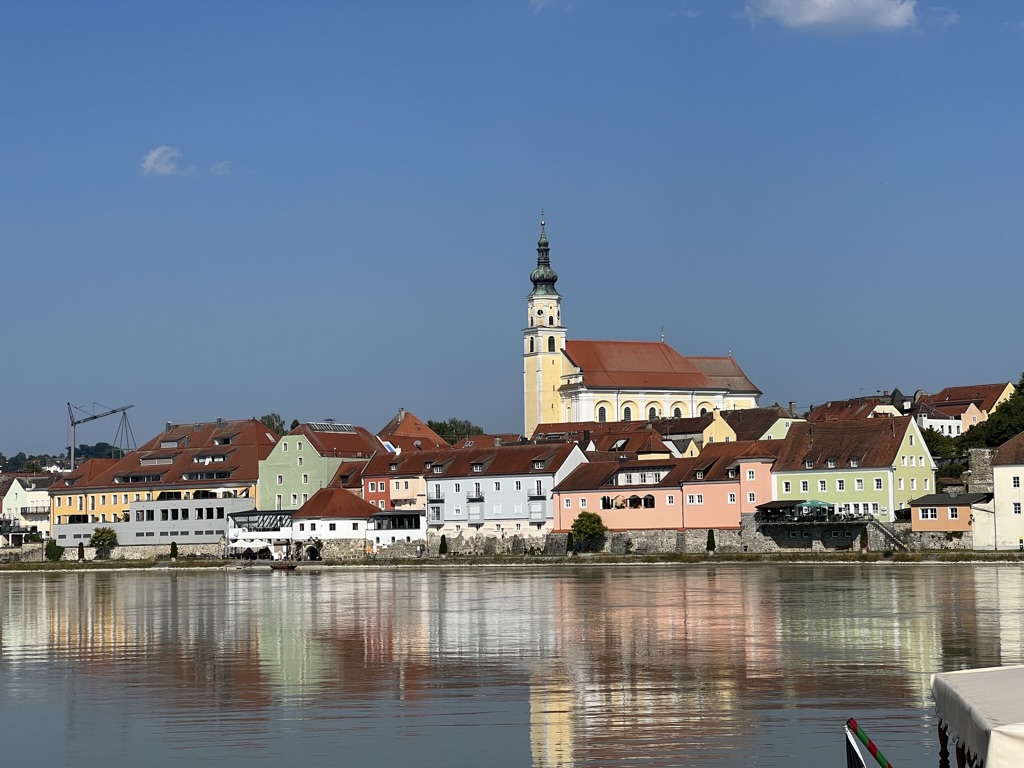
Passau brought another cathedral experience: an organ concert at St. Stephen’s Cathedral. We also visited Schärding in Austria and boarded a smaller boat for a cruise on the Inn River, accompanied by beer, pretzels and Jägermeister.
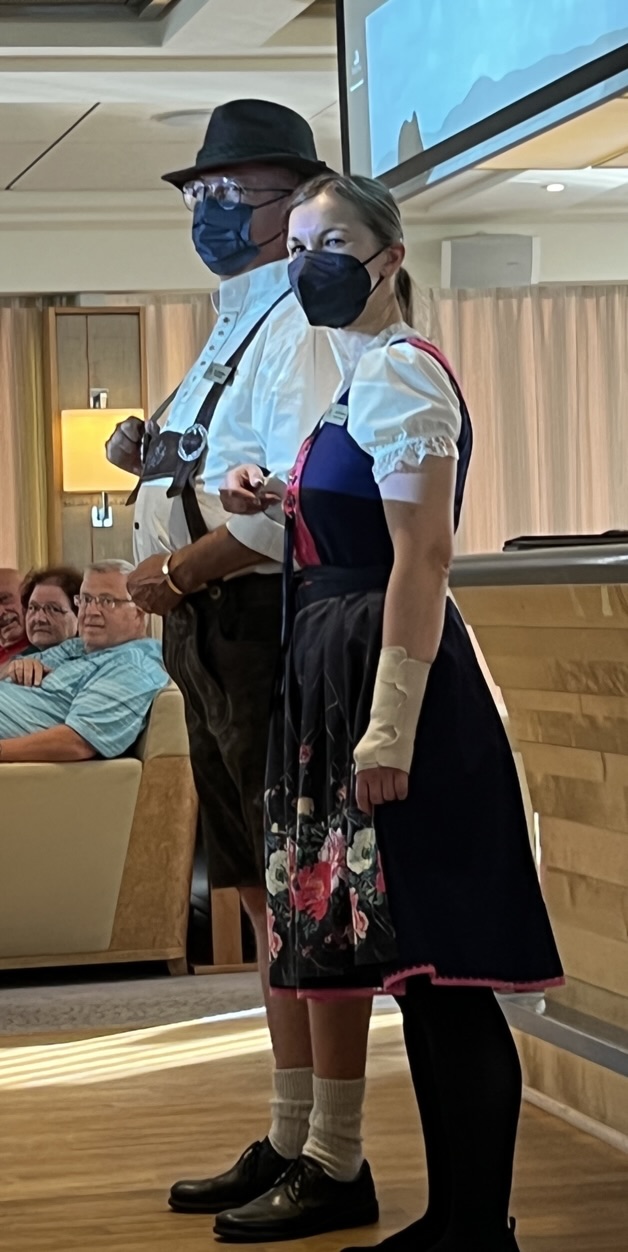
Back aboard our Longship, the evening’s “Taste of Austria” dinner continued the regional theme. The program director and head of hotel services wore lederhosen—one of the onboard details I recorded alongside the day’s excursions.
Melk Abbey, the Wachau Valley and Krems
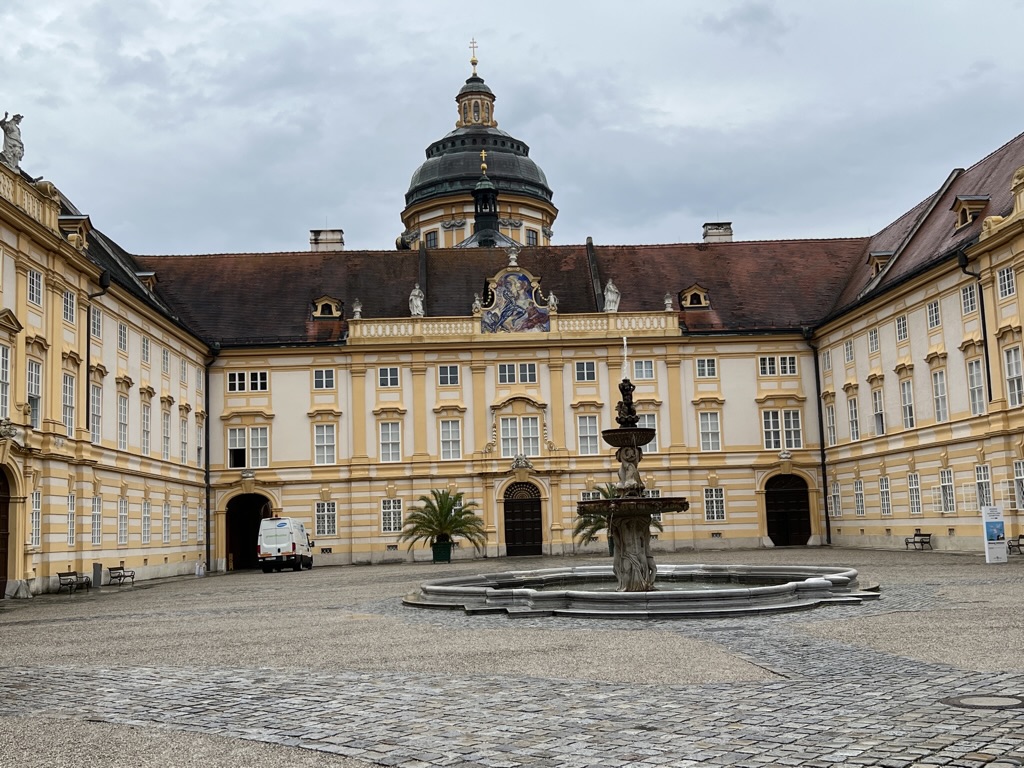
Our next day combined a visit to Melk Abbey, a cruise through the Wachau Valley and time in Krems.
The abbey’s elaborate Baroque interior made a strong impression. I described the church’s abundant gold decoration in my notes, though photography was not allowed inside during our visit.
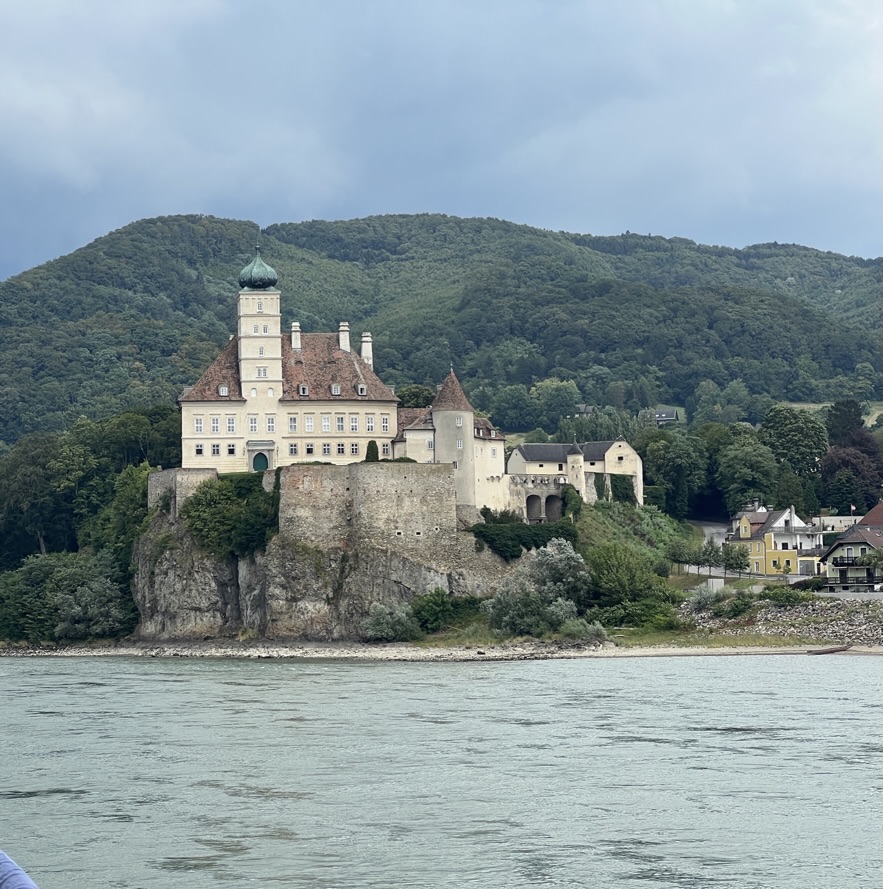
Between Melk and Krems, the river scenery took its turn: castles, small towns and vineyards along the Wachau Valley. This was a day when the journey between stops was itself part of the sightseeing.
There was afternoon tea aboard, followed that evening by a waltz demonstration from dancers visiting from Vienna. The day moved from architecture to river views to an onboard performance.
Vienna: city sights, a food market and Schönbrunn
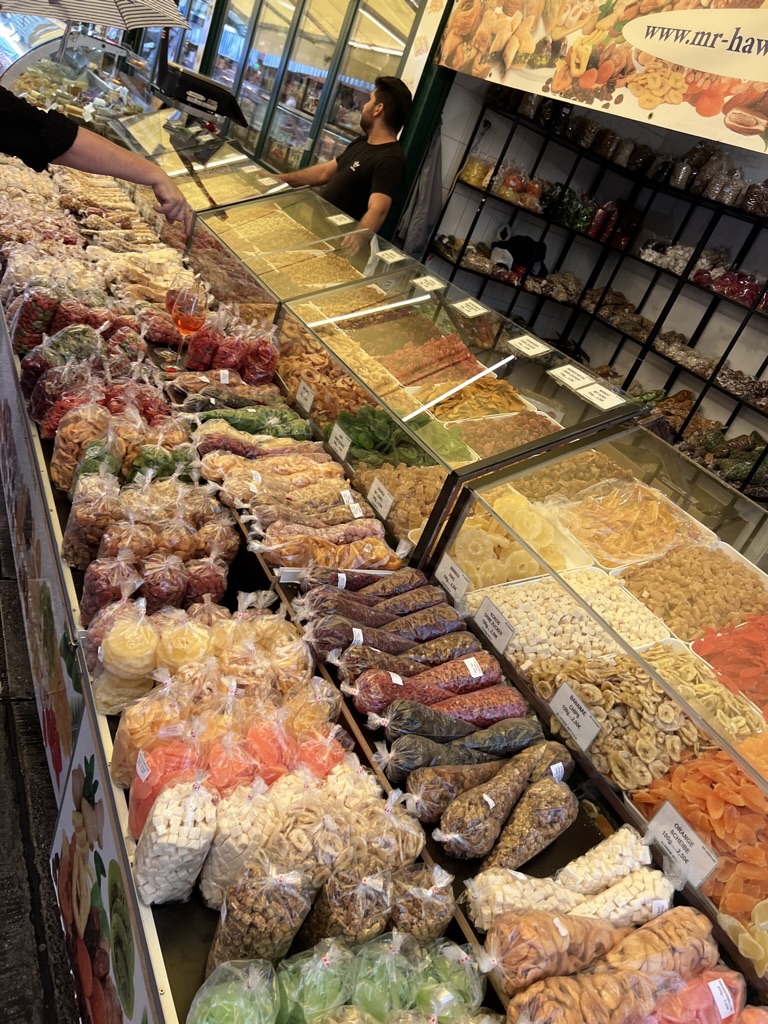
In Vienna, we took a combination bus and walking tour in the morning, then joined a food market tour in the afternoon. As in Amsterdam, exploring through food added another dimension to the city visit.
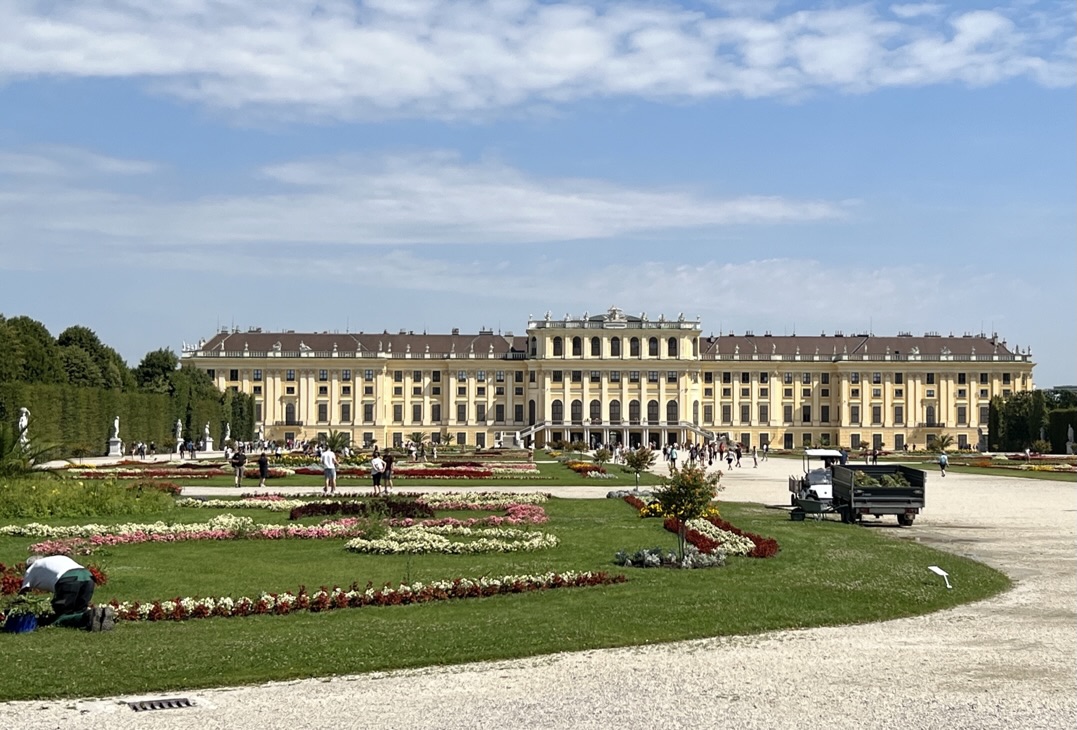
The following day, we toured Schönbrunn Palace and its gardens. That evening, while sailing toward Budapest, we passed Bratislava, Slovakia’s capital.
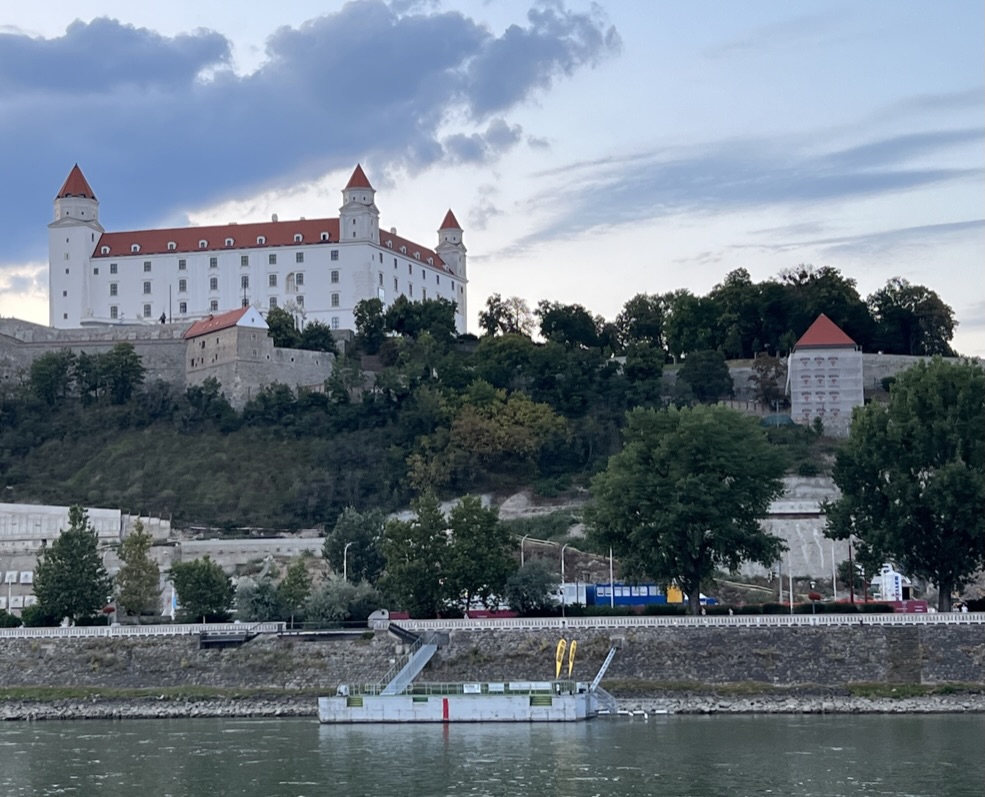
Not every place along the route was a stop ashore. Seeing Bratislava while underway was another part of the experience of traveling between cities by river.
Budapest by day and by night
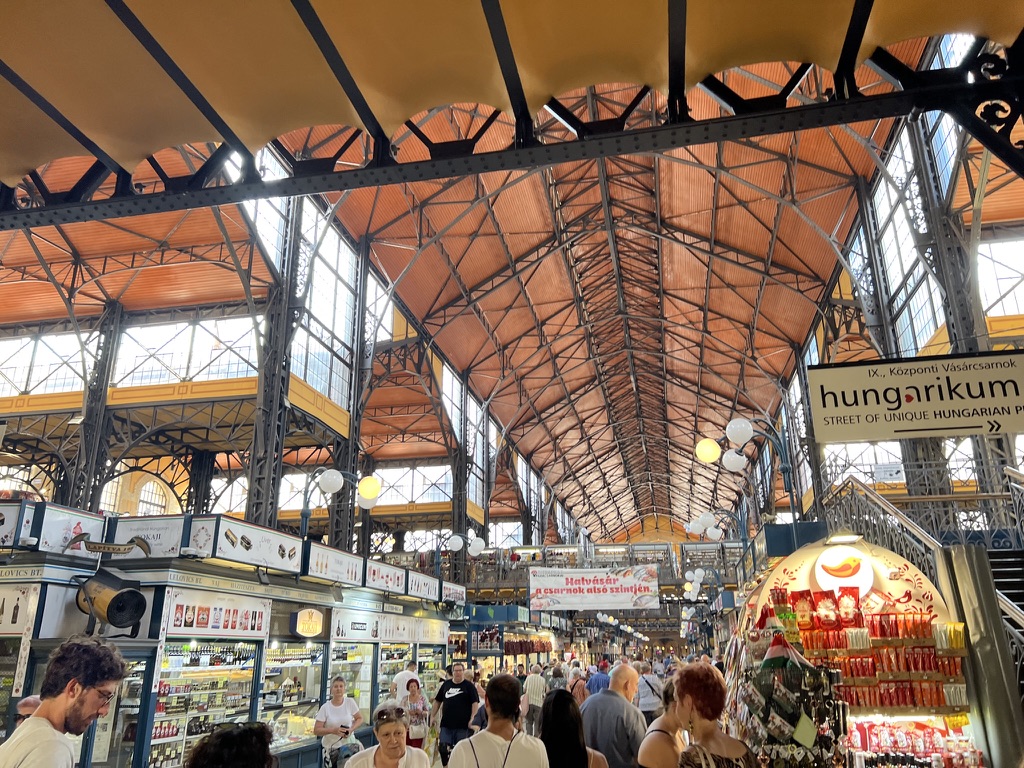
Our Budapest sightseeing focused on the Pest side of the city, with a tour that combined bus travel and walking. We saw Heroes’ Square, the Inner City Parish Church, Parliament, Váci Utca and the Central Market Hall.
We had lunch at the market, bringing another local food stop into a journey that had begun with tastings in Amsterdam. My notes also recorded the layers of history described during our church visit.
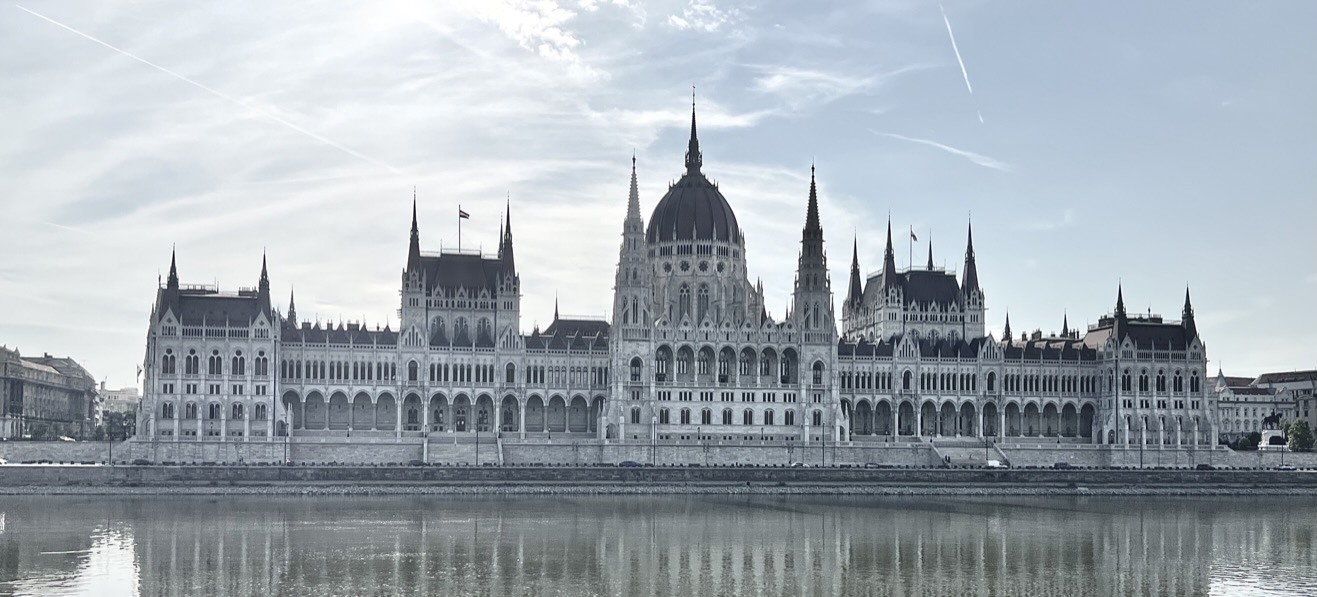
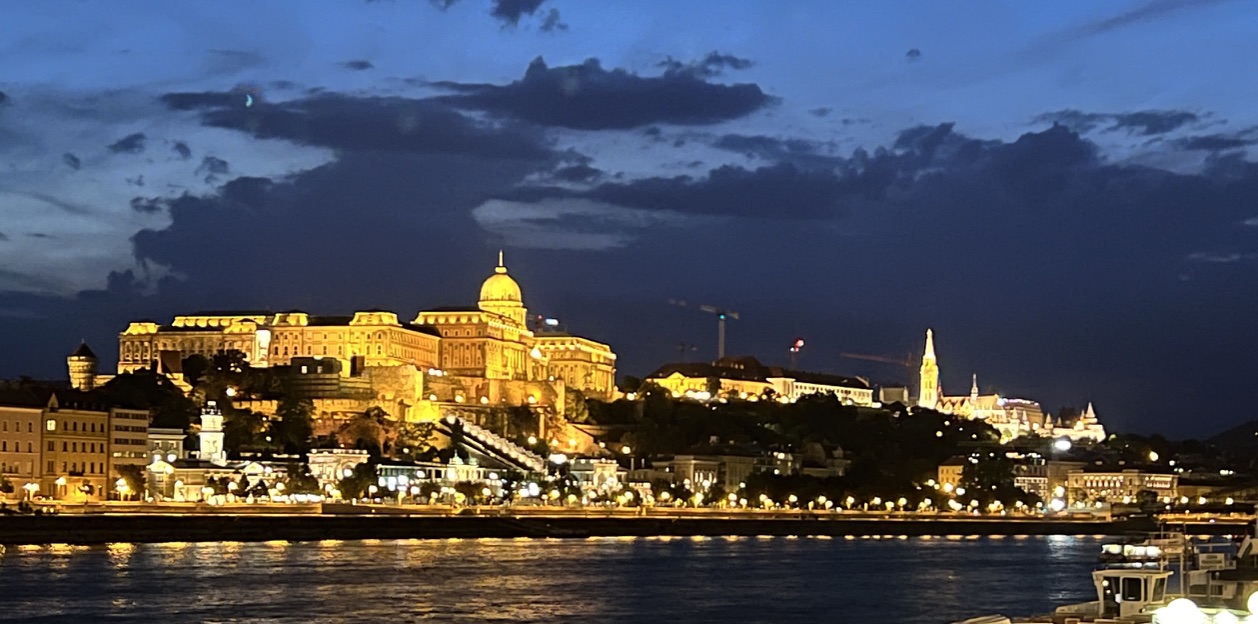
A separate post captured Budapest at night. After so many towns, landscapes and changes along the way, the city provided the final chapter of the cruise itself.
Prague: a final chapter of palaces, music and evening walks
After the Amsterdam-to-Budapest cruise, we continued with a post-cruise extension in Prague. The journey had begun in July, but these final days carried us into August.
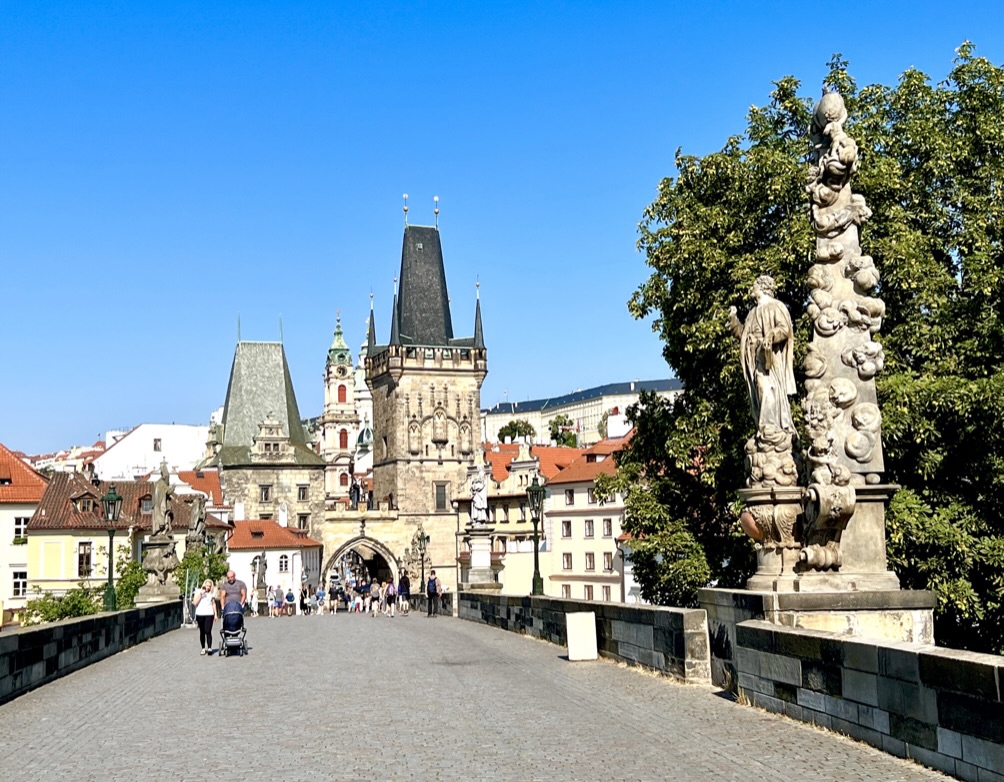
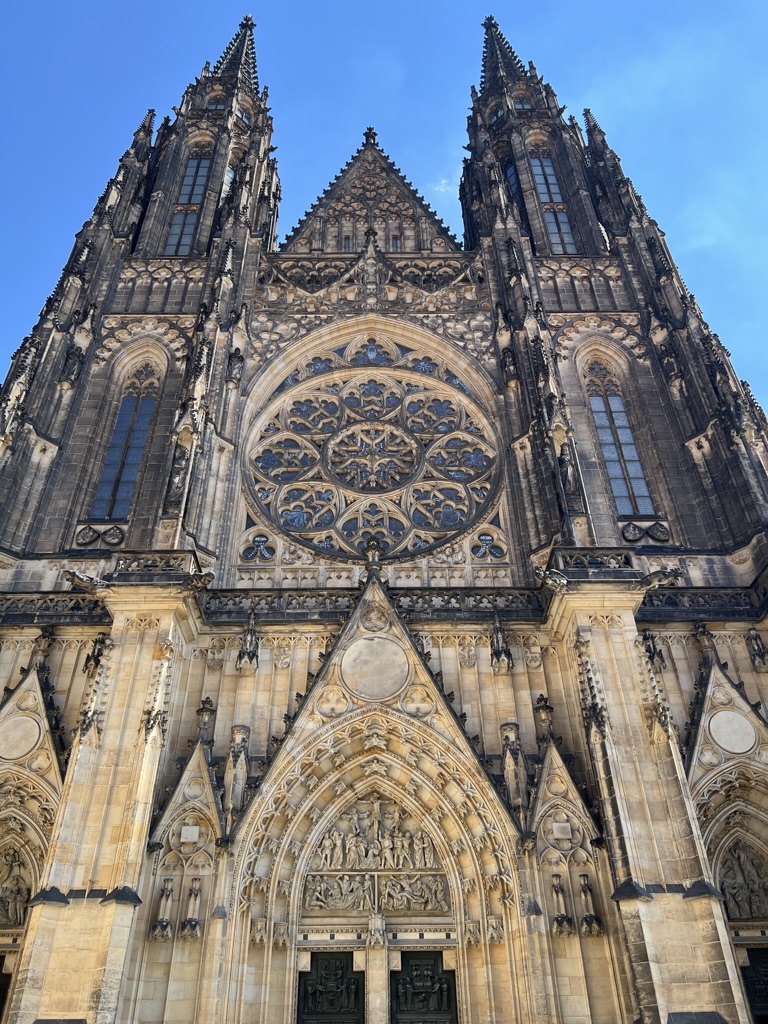
On July 31, we toured Prague’s Old Town, Charles Bridge and Prague Castle. The afternoon brought lunch, a classical concert and a tour at Lobkowicz Palace. After so much sightseeing along the rivers, sitting down for a concert added a different kind of experience to the trip.
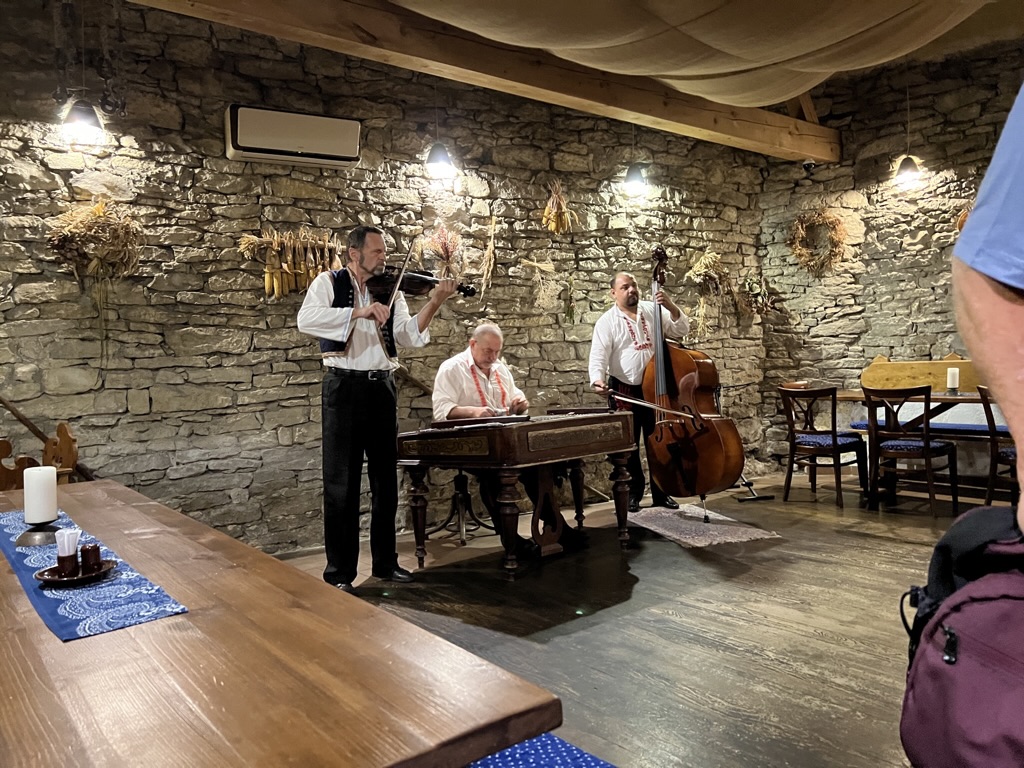
That evening, we attended a folklore dinner. Between the palace concert and the evening outing, music and local culture became part of our Prague stay alongside its streets and landmarks.
The following day, August 1, we explored independently. Our stops included St. Nicholas Church, the John Lennon Wall and Hamleys toy store. I had seen the Lennon Wall in 2019, and my notes recorded that I preferred how it had looked on that earlier visit.
We finished the evening with a Prague at Night tour. Just as Amsterdam and Budapest had given us views after dark, Prague provided an evening outing of its own to close these trip memories.
The extension gave us both organized visits and time to choose our own stops. It also brought the full journey beyond the cruise: extra days in Amsterdam before boarding, two Longships between Amsterdam and Budapest, and a final city stay in Prague.
What our two-ship journey taught us
Looking back, this was a trip with both a rich itinerary and some necessary adjustments. We saw Amsterdam’s museums, Rhine castles, German towns, Austrian palaces and abbeys, Budapest’s city sights, and Prague’s palaces, music and evening streets. We also experienced what low water can mean in practice.
My main planning takeaway is to consider the whole journey: the pace of excursions, the time before and after the cruise, and how comfortable you are with changes along the way. On our departure, low water meant a revised schedule, a day with combined stops and excursions, and eventually a second Longship.
Those changes are part of our story, alongside the organ concert in Passau, the Wachau Valley scenery, the food tours and the evenings aboard.
Planning your own European river cruise?
Our free First-Time European River Cruise Planner can help you organize your ideas and compare options, including time before and after your sailing.
For personal planning help, email robert@rivercruisemadesimple.com.